
If a door you prayed for just slammed shut, and a quiet voice is asking whether God ignored you — or whether you did something to deserve this — you can put that down.
You prayed in faith and it still fell apart. That doesn't mean your prayer failed. Some of the most important turns in the Bible looked exactly like a door being locked from the outside.

Was this a punishment for something I did?
Almost certainly not. You've probably heard, "When God closes a door, He opens a window." That's a proverb, not a verse — the Bible never actually says it. What Scripture does say is that God's redirections are deliberate, and usually protective.
A closed door in the Bible isn't a verdict on your worth. It's God making room. His "no" to one thing is almost always clearing space for a bigger "yes" you can't see yet.
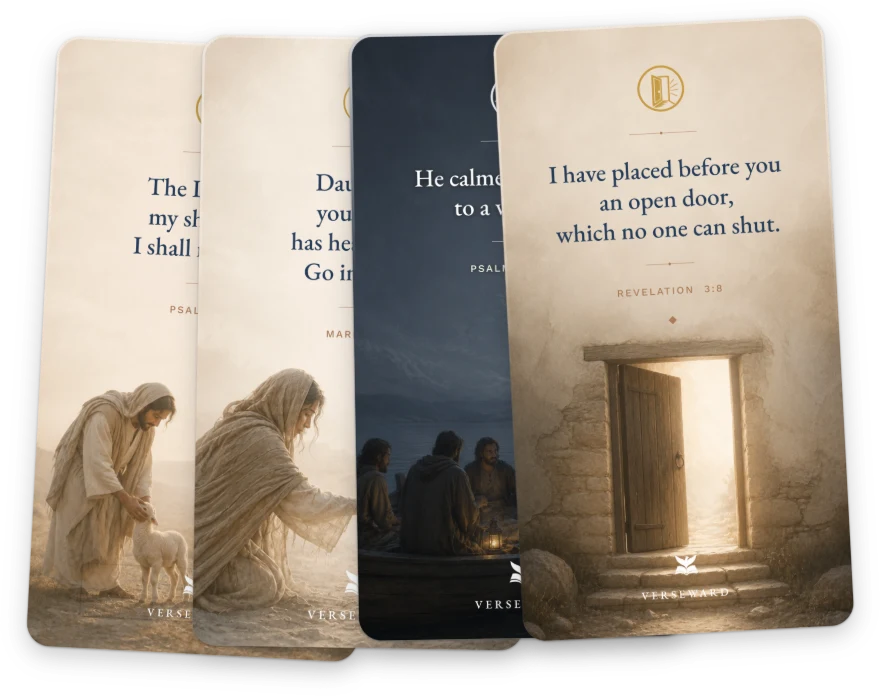
“What He opens no one can shut, and what He shuts no one can open.”
— Revelation 3:7–8

How do I know it's God, and not just bad luck?
Two signals usually show up together.
The first is a quiet, persistent loss of peace. An opportunity can look perfect on paper — the money, the timing, everyone telling you to go for it — and still leave a heavy, restless knot in your stomach every time you pray about it. Many people push past that feeling because they mistake human excitement for God's guidance. Excitement fades under pressure. God's peace doesn't.
“And the peace of God, which surpasses all understanding, will guard your hearts and your minds in Christ Jesus.”
— Philippians 4:7
The second is that Scripture starts speaking to you about the same things — trusting God's timing, not leaning on your own understanding, letting go. When you're straining to force a door, His Word tends to keep crossing your path with the one message you don't want to hear.
“Trust in the LORD with all your heart, and lean not on your own understanding.”
— Proverbs 3:5

What if I could still force it open?
Then it probably isn't fully shut. But when a door is genuinely locked — a contract canceled, a relationship ended, an application rejected after you did everything right — forcing it just delays where God is actually taking you.
Paul wanted to preach the gospel in Bithynia. It was a good plan, nothing wrong with it.
“They attempted to go into Bithynia, but the Spirit of Jesus would not allow them.”
— Acts 16:7
He didn't kick the door down. He trusted that if the Spirit locked the deadbolt, there was a reason — and shortly after, God gave him Macedonia, a far bigger assignment. If a door is bolted shut, stop trying to pick the lock. There's nothing behind it for you.
How will I know when I've actually let go?
The first days after a door closes are panic, grief, frustration. Then something slower happens.
The sharp ache starts to soften. You stop replaying what you lost, and you notice a quieter desire underneath — just to walk with God, whether the door ever opens or not.
You move from "God, I need that door to open so I can be okay" to "Lord, even if it stays closed forever, You're enough."
That shift is the real thing. The door didn't close to break you. It closed to loosen your grip on the one thing you were sure you couldn't live without. The moment your peace no longer depends on it opening, you're already free.

A few things you can do, not just one:
Stop trying to pick the lock. If the door is genuinely shut, forcing it only delays the redirection. Put your energy into the next step, not the closed one.
Treat the peace test as information. If moving forward leaves you drained and anxious every time you pray about it, that's data — not an obstacle to push through.
Ask for the next step, not the whole map. Scripture is "a lamp to your feet" — enough light for one step, not ten years out.